Living Will

An RVing lady-friend sent the following:

.

LIVING WILL FORM…

I, ____________, being of sound mind and body, do not wish to be kept alive indefinitely by artificial means. Under no circumstances should my fate be put in the hands of pinhead partisan politicians who couldn’t pass ninth-grade biology if their lives depended on it, or lawyers/doctors/hospitals interested in simply running up the bills.

If a reasonable amount of time passes, and I fail to ask for at least one of the following:

______Vodka on Rocks ______a Margarita ____ a Scotch ______ Glass of wine_______a Bloody Mary ______a Gin and Tonic _______a Tee Time ______a Steak _____ Beer ______Lobster or crab legs ______the remote control ______a bowl of ice cream ______the sports page______Sex ______or Chocolate,

it should be presumed that I won’t ever get any better.

When such a determination is reached, I hereby instruct my appointed person and attending physicians to pull the plug, reel in the tubes, and call it a day. At this point, it is time to call the New Orleans Jazz Funeral Band to come do their thing at my funeral, and ask all of my friends to raise their glasses to toast the good times we have had.

Signature:__________________________ Date: _____ __

NOTE: I also hear that in Ireland they have a Nursing Home with a Pub.

The patients are happier, and they have a lot more visitors. Some of them don’t even need embalming when their time comes…

It’s okay not to be okay

This was a message on the Facebook page of a friend. Thanks Patty.

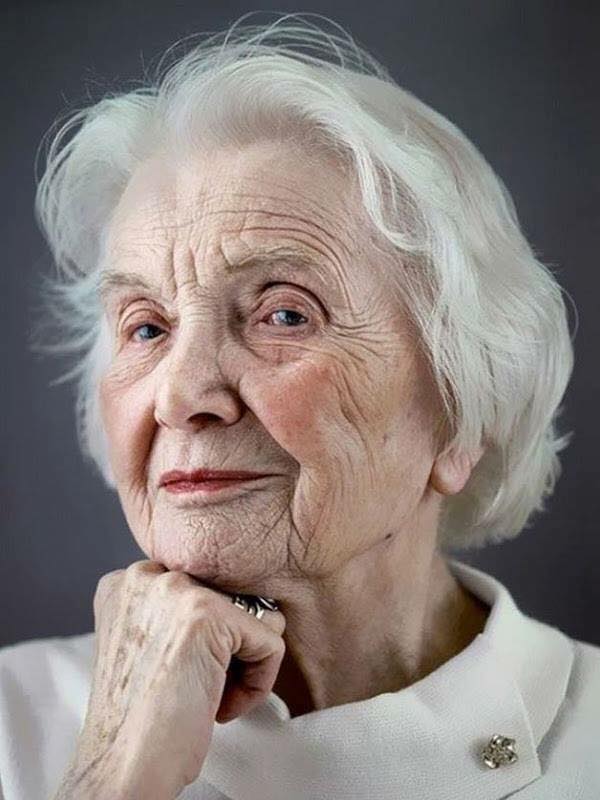
This 92-year-old, petite, well-poised and proud lady, who is fully dressed each morning by eight o’clock, with her hair fashionably coiffed and makeup perfectly applied, even though she is legally blind, moved to a nursing home yesterday. Her husband of 70 years recently passed away, making the move necessary.
After many hours of waiting patiently in the lobby of the nursing home, she smiled sweetly when told her room was ready. As she maneuvered her walker to the elevator, I provided a visual description of her tiny room, including the eyelet sheets that had been hung on her window. “I love it,” she stated with the enthusiasm of an eight-year-old having just been presented with a new puppy.
“Mrs. Jones, you haven’t seen the room …. just wait.”
“That doesn’t have anything to do with it,” she replied. “Happiness is something you decide on ahead of time. Whether I like my room or not doesn’t depend on how the furniture is arranged, it’s how I arrange my mind. I already decided to love it. It’s a decision I make every morning when I wake up. I have a choice; I can spend the day in bed recounting the difficulty I have with the parts of my body that no longer work, or get out of bed and be thankful for the ones that do. Each day is a gift, and as long as my eyes open I’ll focus on the new day and all the happy memories I’ve stored away, just for this time in my life.”
She went on to explain, “Old age is like a bank account, you withdraw from what you’ve put in. So, my advice to you would be to deposit a lot of happiness in the bank account of memories Thank you for your part in filling my Memory bank. I am still depositing.”
And with a smile, she said: “Remember the five simple rules to be happy:
1. Free your heart from hatred.
2. Free your mind from worries.
3. Live simply.
4. Give more.
5. Expect less, & enjoy every moment.
Photograph by Karsten Thormaehlen

Another milestone…

…and not another birthday (ha).

.

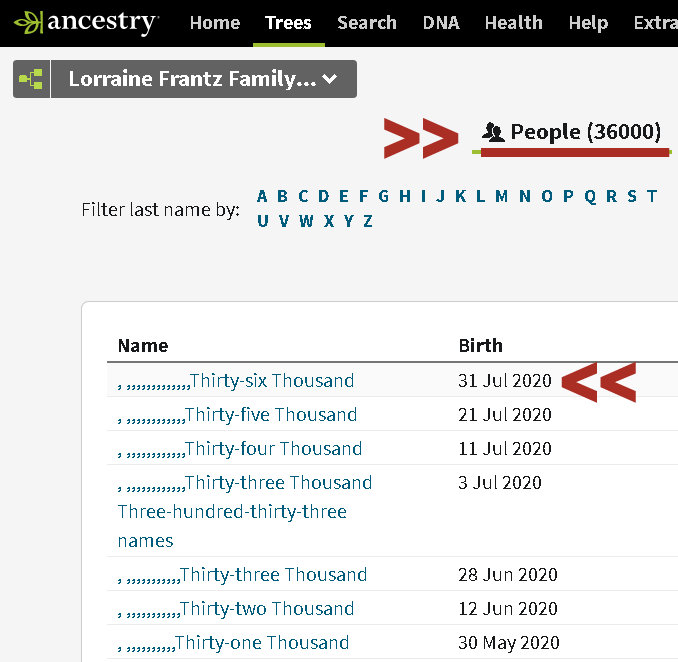
Honestly, I cannot believe I’ve entered five-thousand new individuals to my Ancestry database in two months. One-thousand in ten days, two-thousand in twenty-days. And every individual has two to twenty “source” records attached to their name. I don’t copy from other Ancestry members. I like to think I approach each individual with the precision of a surgeon. “Don’t make a mistake.”

I like to think my computer skills–and my love for ancestry–is a gift from God. Furthermore, I like to think I’m giving a gift to countless individuals who search for their ancestors.

DNA: Something to consider

A friend of this “tree hugger” shared information about a book regarding DNA. Building my family tree involved individuals who (for the most part) lived by tenants set forth in the Bible. Christian folks who belonged to the Old German Baptist Brethren Church and/or Church of the Brethren. (I have Quakers and Mennonites in my “tree” also.) For the most part, my family and collateral lines have been easy to follow and easy to document.

I had a rude awakening recently when a woman contacted me questioning why I didn’t show up as one of her DNA cousins. “Yes,” I’ve submitted my saliva to three different agencies but only subscribe to Ancestry DNA. I’m always eager to help another researcher and I quickly begin to expand my data as it connects to one of their ancestors.

Long story short, my information (with “sources”) did not match the information she shared with me. I was able to view her tree (on Ancestry) and it had me shaking my head. After all, I had “sources” to verify my information. In two email messages, I confessed “I’m confused.”  I’d shared volumes of information with her; I’d sent information that extended her family by several generations; I gave (and she accepted) an invitation to my Ancestry database. Finally, the woman admitted that her published on Ancestry family tree was deliberately inaccurate. It seems both of her paternal grandparents were not her biological grandparents. DNA testing brought that to her attentionand now has my attention.

I reached out to a dear friend who openly, admittedly talks about her non-traditional family. “Dear friend,”  told me about a book titled The Lost Family: How DNA testing is Upending Who We Are. My Google search produced the book and I found this review by Lucinda Robb in The Washington Post, 13 Mar 2020.

Christmas is the busiest time of the year for genealogical testing companies. That is when home DNA kits have their biggest sales, cleverly marketed as the perfect gift for the person who has everything. For many it is just that, a novel present that may inspire a new hobby. But for some it is Pandora’s box, whose secrets, once revealed, cannot be unlearned.

Libby Copeland’s “The Lost Family: How DNA Testing Is Upending Who We Are” serves as an entertaining and impressively comprehensive field guide to the rapidly evolving world of genetic testing. Strap on your seat belt, because this is not your gray-haired father’s harmless hobby. At times it reads like an Agatha Christie mystery with twists and red herrings. But it is also a philosophy book and an ethics treatise, with a touch of true crime. It wrestles with some of the biggest questions in life: Who are we? What is family? Are we defined by nature, nurture or both?

Copeland begins with a tenacious retiree named Alice looking for the truth about her orphaned father’s family. Using her story, Copeland walks the reader through how genetic testing works, with just enough detail to leave you confident in the results (seriously, this is how schools ought to teach biology). But even if 20 pages later you’ve forgotten the difference between autosomal and mitochondrial testing, you will be able to follow along without any trouble. The gist of it is, while some genetic claims are tricky (ancestral heritage is constantly being redefined), others like relative matches are remarkably accurate.

If you are concerned about keeping your genealogical privacy, that ship has largely sailed. A few decades ago, finding that needle of a relative in a haystack was unlikely. But as more people post their DNA online, genetic genealogists can go backward in history to find a common ancestor and then, with public records and detective work, discover a relative in the present day. That’s how they caught the Golden State Killer.

Like any good reporter, Copeland casts her net wide when looking for sources to interview. She talks to people whose casual test revealed an NPE, or “Non Paternity Event” (your dad is not your dad!). One company, AncestryDNA, even has a highly trained customer service team of empathetic listeners to help people dealing with unexpected results. Copeland seeks out adoptees searching for their biological parents, and the offspring of sperm donors who discover they have dozens of siblings. She looks backward at the ominous history of eugenics, which was harnessed by the Nazis and by racist authors today. She examines the efforts to help African Americans trace their heritage, since they don’t show up on census records before 1870. She even reports on people who post on the white-supremacist website Stormfront who discover they are not as white as they thought.

Then there is the financial angle. After reading about the impressive profitability of genealogy companies and their growth potential, you may want to call your broker. As one early entrepreneur states, “This is a multibillion-dollar industry and nobody’s noticed it yet.” Certainly there are a lot of companies doing DNA testing, 246 in 2016 alone, with AncestryDNA dominating with the biggest database. It may remind you of the early days of the Internet, except in this instance, the customers are also the product.

But it isn’t just finding relatives. Companies like 23andMe specialize in identifying genes like BRCA1 AND BRCA2, which are linked to breast and ovarian cancers, and genetic variants for diseases like cystic fibrosis and Parkinson’s. They are partnering with research institutions like Stanford and the National Institutes of Health and pharmaceutical companies like Pfizer to do studies that are just beginning to bear fruit, with the promise that one day scientists can pinpoint with precision the genes that cause a disease. There is a case to be made that companies ought to be paying for you to spit in a tube, not the other way around.

How would we feel if our genetic information was used by companies to deny us health care? Do you even want to know if you carry genetic markers for Alzheimer’s? Is anyone reading the fine print for all these DNA testing companies? Copeland does (so that you don’t have to) and is still pretty mystified.

At times reading this book, you get the sense that we are on the edge of some brave new world. It’s exciting, and a little frightening too. Even if you think (like everyone does) that your family tree holds no uncomfortable surprises, Copeland will make you ponder just how much stock we put into our genetic heritage.

The prodigal son ?

The closest thing to a scandal in my family (to my knowledge) was the conviction of Albert H Frantz for the murder of Bessie Little. My oh my, it was a story that monopolized the newspapers. I’ve read the salacious reporting.  ~~ Albert H. Frantz is my second cousin three-times removed–and you can find him in my Ancestry database.

Here is the brief documentation in the family history I published in 1996. This is from Frantz Families–Kith & Kin, Vol. 2, p. 21. My information is correct (I have “sources” to back it up); details in the article listed above are incorrect. (Yes, the Studebaker family.)

18. Jacob Frantz (Benjamin, 4). Born, 30 Nov 1823, in New Carlisle, Clark Co., OH. Died, 1914, in Dayton, Montgomery Co., OH. Census: 1850, in Pike Twp., Clark Co., OH. Burial in Miami Co., OH. Occupation: Farmer. Old German Baptist Brethren. He married Phoebe Studebaker, daughter of Abraham Studebaker and Elizabeth Steele, 24 Feb 1848, in Miami Co., OH. Born, 12 Feb 1831, in Tipp City, Bethel Twp., Miami Co., OH. Died, 30 Dec 1888, in West Charleston, Miami Co., OH. Burial in Miami Co., OH. Census: 1850, in Pike Twp., Clark Co., OH. Old German Baptist Brethren. Children:
i. Isaac Frantz.
ii. Cornelius C. “Kiehl” Frantz.
iii. Mary Frantz. Born, 19 Feb 1854, in Miami Co., OH. Died, 28 Feb 1854.
iv. Martha “Mattie” Frantz. Born, 15 Sep 1856, in Miami Co., OH. Died, 1921.
Burial in Miami Co., OH. She married Mr. Stutsman?
v. Phoebe Lorena Frantz. Born, 12 May 1861, in Miami Co., OH. She married
Anthony Wayne Pfogtz, 14 Oct 1883, in West Charleston, Miami Co., OH.
vi. Albert J. Frantz. Born, 24 Nov 1875, in Miami Co., OH. Died, 19 Nov 1897. Burial in Miami Co., OH. “Albert was accused of murdering a Miss Bessie Littleton [sic] in Dayton, Ohio, in 1896. He was the first man to be electrocuted in the state of Ohio. He protested his innocence to the end.” Quoting from Hazel Frantz Turner who indicates that her sources were: The Montgomery County Historical Society Bulletin, Aug/Sep 1968 and The Studebaker Family in America 1736-1976, p. 189. “Little” is the accurate surname, per Lela Landes Shoup.